
What is Gnosis?
Table of Contents
- The Meaning of Gnosis by Perspective
- Inner Wisdom Through Direct Experience
- The Origins of Early Christianity
- Nag Hammadi Discovery
- Are There Gnostic Teachings Today?
- How do you Embody the Divine Spark Within?
- The Path of Self-Realization is not Without Resistance. Why?
Gnosis, in English terms, means knowledge. There are many meanings associated with gnosis, one that carries layers of mysticism throughout history. We’ll dive into who the gnostics were, what happened to them, and how it continues to be present today. Along with the diverse interpretations of gnosis, and how you can apply it in your daily life.
The Meaning of Gnosis by Perspective
The literal meaning of gnosis, derived from the Greek, refers to experiential knowledge. One from direct experience, not from a book. The experience becomes your truth, and how you live it.
The spiritual meaning of gnosis is inner revelation of the divine or inner knowing. It bypasses clergyman and institutional structures, while it reveals itself within the soul. In early christianity, Gnosis was commonly known for having the divine spark within you, viewing the material world as full of archonic domination, and achieving salvation through awakening the inner self to remembrance.
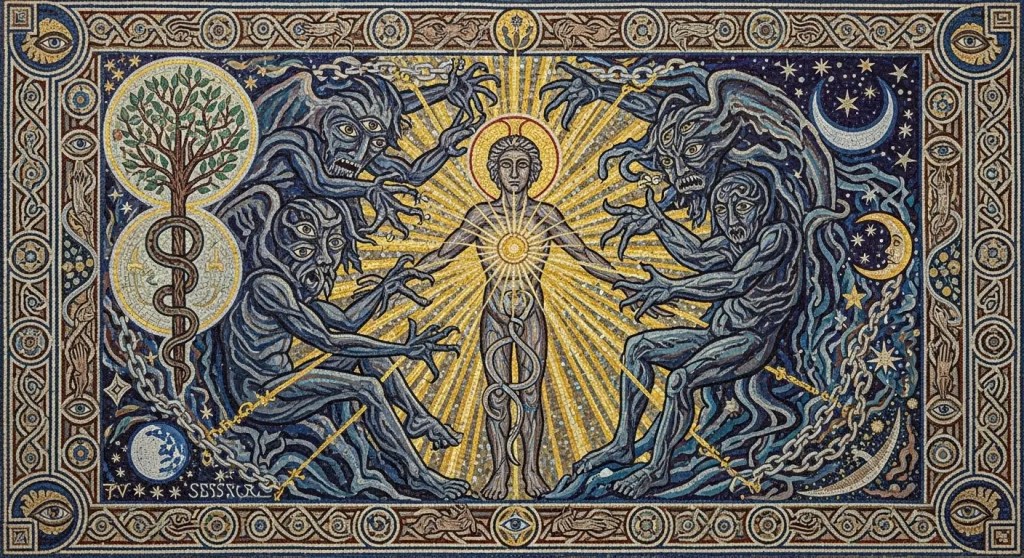
In psychology, gnosis was interpreted as intuitive insight. Carl Jung would refer to it as the ‘Self’ or archetype of wholeness, the recognition that elevates your inner world. For example, instead of learning that love is powerful, you experience unconditional love, and it changes you completely and permanently.
In the quantum realm, gnosis is lived experience, and belief is turned into a direct encounter with Source. Your faith is changed into experience. Both are transmuted into remembering what your essence has always known. Belief is temporary and gnosis stays with you eternally.
Modern Application of Gnosis
Gnosis can feel abstract and old-fashioned. So, let’s take a modern approach. For example, you read a book about swimming, that’s information you’re digesting. The knowledge part is taking a swimming class and practicing with an instructor. Gnosis is falling into water and realizing you can already float or swim. Your logical mind has bypassed sequences of failure, and your inner being already recognizes your experience.
Inner Wisdom Through Direct Experience
Inner experience contradicts external authority. Gnosis is knowing your connection with Source through direct experience instead of seeking knowledge from a clergyman. Therefore, you don’t need validation from anyone. You’ve already done it through your practice. For example, meditation or yin yoga allows you to be present through stillness, letting the subconscious provide insights that you may never have thought of. Your experience is lived.
When you connect with your higher self or Source directly, you embody your own divinity, you expand your consciousness through your own actions, like breathwork, workshops, or through channeling.
Today, you might call it flow state, or deep intuition. Your soul is getting information directly from Source. This entails when you are aligned with your purpose.
Gnosis is a state of being that entangles with Source without interference. Your intuition is revealing a pattern that is revealed all at once, and the step-by-step reasoning becomes obsolete.
Have you ever felt an “aha” moment of clarity,
Or synchronicities that align in front of you in perfect timing,
Or feeling inspired to do something bigger than you.
That is Source’s way of communicating to you of being in alignment.
In modern entertainment, many ideas are about gnosis, For example, the “Matrix movies in which Neo finds his awakening, while battling machines as archons, and the Demiurge as the Architect.
Science fiction and fantasy can be outlets for gnostic archetypes. Sci-fi movies that depict themes of Gnosis, portray direct experience instead of external dependence, and embody wisdom from borrowed beliefs.
You stop seeking truth from outside influence and become something you remember.
The Origins of Early Christianity
If we trace back through history from the 1st century, the ancient world carried an enigma of gnostic traditions that spread through the Middle East and into Southern France. Gnostics did not abide in the church; they were more about awakening inner remembrance. They believed that every human carried the divine spark within them, and the goal was to awaken and reunite with Source from the material world.
Everybody knows the Gnostics between the 1st and 4th century were early christians and seekers. They believed Jesus was born to reveal the Gnosis within ourselves and not from an institution. Many also believed that the world was inhabited by lower density beings that obscure the true divine light, and that salvation was really about inner awakening, not through rituals or church authority.
Gnostics were mostly embedded in mystery schools like the Sethians, Basilideans, and Valentinians. They were not just Christian; many existed in Hermeticism, Neoplatonism, Jewish mysticism, and Egyptian mystery schools.
Gnostic Influence through History
Gnostics were spread throughout the Middle East and Mediterranean; the Nag Hammadi texts found in Egypt show a strong understanding of Gnosis. In Syria, Valentinian and Sethian schools flourished during the 1st century and were later dismantled in the 4th.
In Europe, the Balkans, and Cathars carried their knowledge of dualism and teachings of inner light. Both were exterminated by the crusades and the inquisitions.
In North Africa, Gnostic-Hermetic blended with early islamic sufism and coptic streams. Their influence carried through the 3rd and 5th century, where Neoplatonism was practiced.
In the 12th-13th century, Kabbalah, known as Jewish mysticism, shared parallels with gnostic ideas and tasks of liberation from being trapped in matter.
During the 14th century, Meister Eckhart was a catholic priest who echoed the idea of finding the divine within rather than through church authority.
In the Renaissance, Alchemists often inherited in gnostic hermetic wisdom, such as the sophia (wisdom), transmuting matter into spiritual ascent.
Poetry in the Romantic period was influenced by William Blake and Nietzsche. They emphasized seeing through the illusion and claiming inner freedom.
Carl Jung studied Gnostic texts and explored the bounds of consciousness. He interpreted Gnosticism as individualization or the divine Self.
Nag Hammadi Discovery
When the Gnostics rose in the 1st century, their ideas were radical and unconventional in regard to the church. Their ideas and philosophy are mostly inscribed in the Gnostic Gospels that included Thomas, Philip, Mary Magdalene, Truth, and Sophia of Jesus Christ. These texts contained knowledge of the inner Gnosis, which contradicted the church’s power of blind faith.
The gnostic belief clashed with the emerging Orthodox church. It was at the Council of Nicaea in 325 CE that the church fathers decided to standardize the Biblical canon throughout the ages.

Gnosticism was considered heretical and undermined the power structure of the church. As a result, the church launched the Albigensian Crusade, which ended the lives of the Cathars in the millions. Only pockets survived and managed to stay underground while the Inquisition followed.
It wasn’t until 1945 in Egypt, the Nag Hammadi Library was discovered by several farmers. The 12 codices of Gnostic texts survived and were hidden by monks for 1,600 years. This was the mark in which the authentic gospels were brought back to light, translated and interpreted to provide insight of the inner knowledge within us.
Are There Gnostic Teachings Today?
Yes, in modern churches like the Johannite and the Ecclesia Gnostica. They still remember the Gnostic tradition that was once hidden away. Some practitioners identify as embodying the Gnostic frequency and provide knowledge for those who seek direct experience of the divine connection without dogma.
Direct Experience vs Religious Doctrine
Gnosis is limited in the sense of institutions and school programming that we are initially taught to seek outside ourselves. Gnostic teachings are suppressed because they bypass religious hierarchy and honor the divine feminine, The Sophia, the Magdalene, and Inanna. Gnosis reveals inner divinity and not original sin. It questions the authenticity of centralized religion and threatens the Vatican’s monopoly. Gnosis threatens the systems that benefit from obedient, disempowered citizens and cultural control over narrative ownership.
If Gnosis were to be taught in schools, it would awaken sovereignty, inner truth, and noncomplacency; this would be incompatible with the current power structure.
How Much Sacred Knowledge is Controlled?
With the global influence of the Vatican and the Jesuits, they are connected with banking networks, governments, and royal families or New World Orders, with debated sources. The preservation of the Vatican archives contains documents that predate the Vatican, which are sealed away only for approved scholars.
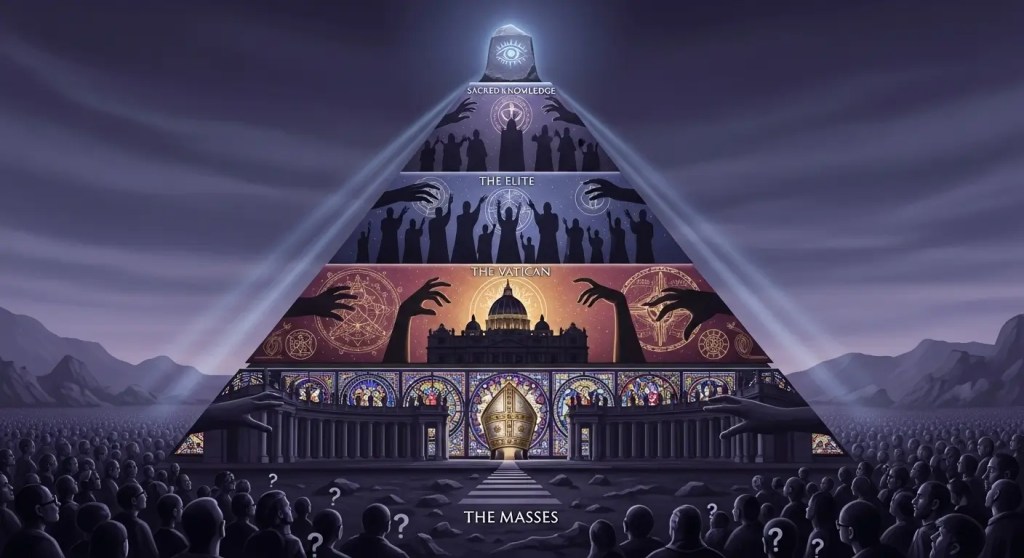
With the Jesuits’ influence and being the advisors of language, diplomacy, philosophy, and perception, they shape the modern education system that is built to narrate the “acceptable” historical narrative and emphasize controlled spirituality. They institute a cosmology built on control, not liberation. They may be brilliant, but they are restricted to orthodoxy.
How Can You Apply Personal Guidance Today?
If Gnosis were to be taught in the modern era, teachers would not be teaching information or institutional doctrine. They would guide others in awakening the direct spiritual knowing, uncover divine essence within, dissolve false dependencies and external authority. They would embody truth in our daily lives. Gnosis cannot be forced; it needs to be evoked.
To apply Gnosis, you need to define the stream that speaks through you, what lineage or tradition resonates with your soul (Hermetic, Magdalene-Sophia, Sufi, mystical Jewish). Ask yourself what experiences or initiations qualify you to share this? What is your living experience with the Divine? Gnosticism is spoken with authenticity, and your authority is through embodiment.
What would it mean for Gnosticism to be taught in the Education System?
In a society that accepted Gnosis, it would allow children to learn inner guidance and trust their intuition. Many would see the God within themselves and not a distant, vengeful God. People would admire and care for Earth and the feminine wisdom. The power structures that are built on patriarchy would crumble, and truth would be internally sourced. That is why Gnostic teachings are systematically suppressed or discredited through religious doctrine and societal programming.
How do you Embody the Divine Spark Within?
If you’re looking to find answers, and you don’t know where to look, simply find a quiet place to sit and meditate. Take a few deep breaths in through the nose and out through the mouth. Then, with your eyes open, just look at your surroundings and notice the environment that you are in. Notice the details and the structure that takes place.
Don’t think about anything, just observe. After that, close your eyes and settle in with your breath. You can sit with the breath, or you can ask, “What is the next step I need to take?” Feel into the first thing that comes to mind. If you don’t receive anything, that’s okay. Maybe the quiet space is all you need. Whatever comes to mind, follow it and see where it will take you. Or you can ignore it completely; it’s up to you.

Meditation, breathwork, and guided inner journeys are tools to embody our inner divinity and self. If you feel like learning from teachers, do your due diligence in discerning who embodies the gnosis frequency and feel into what their mission is.
There are tons of somatic practices and mentors that can guide you in your spiritual journey, and it is up to you on how you want to approach it. Since you’re reading this article, I will give you a few journaling prompts for Automatic Writing to give you a sneak peek of what I offer:
- “What is my single-minded purpose for today?”
- “What do I need to know today?”
- “What can I do right now that will help me in my journey?”
As for gnosis-themed dialogues, find groups that embody the inner divinity. Or work with practitioners who offer one-on-one guidance for seekers. Find what shadow work is and learn how to integrate it within rather than separate it from you. Find meditation videos or groups to help deprogram old beliefs and structures. Look into soul retrieval through a certified coach. Find creators that resonate with you and always practice discernment. Feel into their content and ask; Is it resonating with me? What are their intentions?
The Path of Self-Realization is not Without Resistance. Why?
Teachers who embody awareness will often receive ridicule and negative outreach from religious authority, academics, New Age superficiality, and cultural apathy. The truth is, you may be misunderstood, and that’s okay. What matters is how you stay grounded in your daily connection to the light within. Align with a support system with mentors, guides, and community. Practice energetic hygiene like clearing, shielding, or grounding with the earth.
Many who go through this path don’t want dogma; they want experiences.
If you’re new and want to find real tools of inner knowledge, Automatic Writing is a great place to start. In my course, I talk about how to connect with the Higher Self, discern between fear, programming, and truth. You’ll also learn how to transmute emotions into insights, and how to receive guidance in relationships, creativity, and life-purpose.
Teachers of gnosis don’t teach; they embody. Your life is actually a journey. Your presence is enough; no need to perform. Embody the living gospel within you and permit the inner light to guide you in joy and purpose.
Next:
“AI tools were used for research synthesis and editorial assistance; all final texts were reviewed, rewritten, and approved by the author.”
Works Cited
The Gnosis Archive: Resources on Gnosticism and Gnostic Tradition
Gnosticism: Gnosticism from the Middle Ages to the Present | Encyclopedia.com
Council of Nicea – Ascension Glossary
The Entire History On ‘The Jesuit Order’ & The Plans Of World Domination Full Documentary YouTube
Copyright 2025 Trent Phillis, http://www.TrentPhillis.com, All Rights Reserved. Please copy and share this article as long as it is shared in its entirety, including this copyright notice, and the information is not altered, excerpted, or added to; credit of authorship and my website address (www.TrentPhillis.com) is included; and no money is exchanged. For any other uses, please contact Trent Phillis to obtain permission. Thank you.


 Yeshua and Mary Speak
Leave a comment