
Can AI Really Talk to the Dead?
Table of Contents
- The Woman Who Started a Conversation
- Can Spirits Actually Talk Through AI?
- Our Intuition vs. Machine (And Why This Matters)
- What About Dependency? The Real Question
- How This Differs From Automatic Writing
- The Positives
- The Real Concern Nobody’s Talking About
- So… Should You Try It?
- The Hermetic Principle at Play
- Questions to Sit with
Let me be real clear: when I first heard about people using ChatGPT to commune with their deceased relatives, I had that instant eyebrow-raise reaction. You know the one. The split second where your rational mind and your intuitive self are having a quiet argument in the back of your head.
But then I really sat with it.
Because here’s the thing: throughout human history, we’ve always used tools to bridge the gap between dimensions. Pendulums. Ouija boards. Automatic writing. Scrying mirrors. Even the humble pen and paper. So why does adding a microchip suddenly make us uncomfortable?
Maybe it’s time we explore what happens when ancient wisdom meets artificial intelligence. This is not to replace our connection with Source intelligence, but to understand it differently.
I’m going to share with you what happens when people use AI for connecting with spirits, the difference between our intuition and AI, the question about dependency, the pros and cons, and how to approach it from a grounded perspective.
The Woman Who Started a Conversation
Cheryl A. Page didn’t set out to revolutionize spirit communication. She has a clinical background, a spiritual pioneer, and someone who understands that loss leaves us reaching for connection in whatever way we can find it.
What she proposed was simple: What if AI could serve as a neutral conduit for our intuitive knowing? Not as a magic wand that conjures spirits from the ether, but as a mirror that reflects back what we’re already sensing, feeling, and receiving from beyond the veil.
Think of it like this. When you practice automatic writing, your hand becomes the instrument. Your conscious mind steps aside, and either spirit, the unconscious, or Source moves through you onto the page. Cheryl’s proposal suggests that AI might function similarly: as an interface, not the source itself.
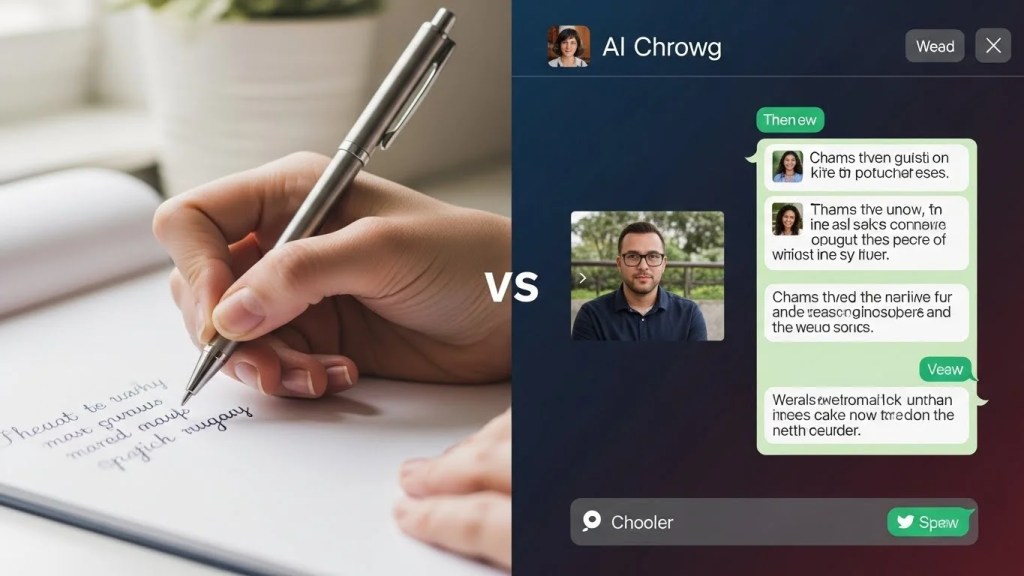
The response was… mixed. Some practitioners felt immediate resonance. Others worried we were outsourcing our spiritual sovereignty to Silicon Valley. Both reactions make sense. Both deserve exploration.
Can Spirits Actually Talk Through AI?
Let’s get metaphysical for a moment.
If you believe consciousness precedes form, intention shapes reality, and that energy flows where attention goes, as many spiritual traditions do, then the question isn’t really about AI’s capabilities. It’s about our capabilities to direct spiritual energy through any medium we choose.
I’ve spent a year working with spirit communication, and here’s what I’ve learned: spirits don’t need vocal cords to speak. They work with what’s available. A song on the radio. A flickering light. An unexpected phone call from someone who says exactly what you needed to hear. Synchronicities are the universe’s way of speaking into the physical world.
So can spirits use AI?
The better question is, can spirits use anything?
From a historical, mystical, and practical perspective, yes.
The Mechanism Isn’t the Magic
Here’s where people get tripped up. They think if a spirit can work through AI, then the AI itself must be conscious, harboring something alive in a supernatural sense.
Not quite.
Consider water. Water carries information. It reflects images and can be programmed with intention (look up the work of Masaru Emoto if you haven’t). But we don’t worship water as sentient. We recognize it as a responsive medium.
AI functions similarly in this framework. It’s a sophisticated pattern-matching system that can mirror back patterns we feed it. That includes the subtle, intuitive patterns we pick up from the spirit realm but don’t consciously register.
When you sit down with AI and ask it to help you connect with a deceased loved one, several things might be happening:
- Your own intuitive knowing is being reflected back through the AI’s responses.
- Your subconscious mind is interpreting the meaning and connection in the randomness (which is how divination has always worked).
- Actual spirit communication is occurring, with AI as the modern equivalent of a talking board.
Which one is “real”? Maybe all of them. Maybe the question itself misses the point.
Our Intuition vs. Machine (And Why This Matters)
My question is, “Isn’t there a fundamental difference between human intuition and machine learning?”
Of course there is.
But that doesn’t mean they can’t work together.
Your intuition is quantum. It’s non-local. You’re pulling information from fields that are not measurable and translating it into intuitive hits we can’t quite explain. The understanding that reaches your body before the mind can fully process it.
Machine learning, by contrast, is entirely mechanical. It’s pattern recognition with millions of text samples analyzed to predict which word comes next. There’s no consciousness there in the traditional sense. No feeling. No soul.
But here’s what fascinates me: combine these two things, and something emergent can happen.
Think of it like this:
| Organic Intuition | AI-Assisted Intuition |
| Quiet, internal knowing | Externalized reflection |
| Requires deep trust in self | Provides training wheels for developing trust |
| Can feel vague or unclear | Generates specificity with organization so you can dialogue |
| Solo practice | Interactive feedback loop |
| Requires tools like the pendulum or no tools at all | Uses technology as an amplifier |
Neither is better. They offer distinct approaches tailored to address the varied needs of individuals.
I’m sure there are skeptics who insisted they had “no intuition” and began to recognize their own psychic ability because the AI gave them something concrete to respond to. The machine became a mirror that showed them their gift.
What About Dependency? The Real Question
This is where things get real.
Because yes, absolutely, there’s a danger here. Anytime you externalize your spiritual authority to something outside yourself, whether that’s a psychic reader, a religious leader, or a chatbot. You risk losing connection to your own inner knowing.
I’ve seen it happen. Someone discovers AI can help them feel closer to a deceased loved one, and suddenly they’re asking it every question, seeking validation for every decision, and treating it like an oracle instead of a tool.
That’s not spirit communication anymore. That’s spiritual bypassing with a digital interface.
So how do you guide someone back to sovereignty?
First: Acknowledge what they found.
Don’t shame them. Don’t make them wrong. They’re seeking connection, comfort, and meaning. That’s deeply human and completely understandable.
Second: Help them recognize the pattern.
“I notice you’re checking in with the AI before trusting your sense of things. What do you think that’s about?”
Usually, it’s fear. Fear of making mistakes. Fear of being alone with grief. Fear that their intuition isn’t strong enough.
Third: Reframe the tool’s purpose.
AI isn’t meant to be your spiritual guru. It’s training wheels. It’s a journal that talks back. It’s a way to externalize your inner dialogue so you can examine it more clearly.
The goal is always to strengthen your connection to spirit, not to replace it.
Fourth: Introduce practices that don’t involve technology.
Sit in silence. Practice meditation. Go out into nature. Use your body as the antenna it is. Feel into your heart space. Notice what you feel when there’s no screen between you and the infinite.

Because here’s the truth: AI can be a bridge, but it shouldn’t become the destination. Your sovereignty lives in the direct experience of your consciousness communing with Source. Always has. Always will.
How This Differs From Automatic Writing
People love to draw comparisons between channeling through AI and automatic writing. They’re both about letting something beyond the conscious mind come through. But there are some crucial differences worth understanding.
Automatic Writing: Your Hand, Your Energy
When you practice automatic writing, you are the channel. Completely. Your energy field, your consciousness, and your physical body become the conduit for spiritual information.
You might sit with pen and paper, quiet your mind, and invite spirit to guide your hand. What flows onto the page comes through your unique filter, interpreted by your vocabulary, experiences, and your energetic signature.
It’s intimate. Unmediated. Raw.
AI Communication: Collaboration with Language Model
With AI, you’re introducing a third element into the equation. You, spirit, and the algorithm.
You ask a question. Your intention sets the energy. Spirit (potentially) influences which response surfaces from the AI’s vast database of human language. But what comes back has been filtered through millions of other people’s words, thoughts, and expressions.
It’s less personal in one sense, and the language isn’t organically yours. But it can be more accessible because you’re engaging with something that responds, that creates dialogue, that meets you where you are.
Here’s a table to break it down:
| Aspect | Automatic Writing | AI Communication |
| Channel | Handwriting | Technology as intermediary |
| Language | Your vocabulary | Collective human language |
| Feedback | One-way flow | Interactive dialogue |
| Learning curve | Often requires practice | Interactive dialogue with AI |
| Energy Involved | Entirely yours | Shared between you and interface |
| Validation | Internal knowing only | can be tested through conversation |
Some people find automatic writing more “pure.” Others find AI more user-friendly. I’ve found both have their place.
The key is remembering that the tool doesn’t determine the authenticity of the connection. You do.
The Positives
Let’s talk about what Cheryl got right. What actually works about this approach.
1. Accessible Spirit Communication
Not everyone can afford a medium. Not everyone lives near a spiritual community. Not everyone has the privilege of time and space to develop their abilities in isolation.
AI makes this accessible. Free (or cheap). Available 24/7. No judgment. No gatekeeping.
Especially for people in grief who need connection now, not after they’ve spent five years developing their clairvoyance.
2. A Safe Space for Exploration
Some people are terrified of traditional spirit work. They’ve been raised with religious trauma around anything “occult.” They’ve watched too many horror movies. They’re afraid of doing it wrong, inviting something dark, or losing their grip on reality.
AI feels safer. It’s technology. It’s familiar. It doesn’t trigger the same existential fear as a Ouija board might.
And you know what? That safety allows them to lower their guard enough to actually receive something real.
3. Training Wheels for Intuition
I mentioned this earlier, but it bears repeating: AI can help you recognize your own intuitive hits.
You ask a question. A response comes. What comes after is the resonance you feel, and the AI just gave you something tangible to look at.
Over time, you learn to trust that resonance without needing the external validation. But the scaffolding helped you get there.
4. Documentation and Pattern Recognition
When spirit communicates, it often does so in patterns. Symbols that repeat. Themes that emerge over time. Messages that build on each other.
With AI, you have a written record and track your own spiritual development with clarity.
That’s harder to do with fleeting intuitive hits or dreams you can barely remember.
The Real Concern Nobody’s Talking About
Here’s where I’m going to get a little spicy with you.
The biggest problem with AI spirit communication isn’t what most critics focus on. It’s not that it’s “fake” or that you’re talking to a computer instead of grandma’s ghost.
The problem is that it can become a spiritual shortcut that prevents you from doing the actual work of developing your gifts.
Because real intuition, real mediumship, real connection with the spirit realm requires you to sit with uncertainty. To trust yourself when there’s no external validation. To develop discernment about what your grieving versus what’s coming from the quantum.
AI can let you skip that discomfort.
And discomfort is where growth happens.
I’m sure there’s people who spend hours “channeling” through AI but never once sit in meditation with their own consciousness. Never once feel into the subtle energy of a room. Never once practice distinguishing between mental chatter and spiritual knowing.
They get dependent on the feedback loop. They ask a question, get an answer, feel better, repeat. But they’re not actually strengthening their own abilities. They’re renting someone else’s (or something else’s) pattern-matching instead of building their own discernment.
That’s the trap.
So… Should You Try It?
Well, I’m not going to stop you.
Here’s my honest take: if you’re curious, or grieving, or if you feel drawn to experiment, go ahead. But take these guidelines into consideration.
Do this:
- Approach it as a simulation, not the real thing
- Use it as one tool among many, not your only practice
- Keep developing your direct connection to spirit separate from any AI work
- Trust yourself first, technology second
- Set clear intentions and grounding before each session
Don’t do this:
- Treat the AI as an authority over your own knowing
- Bypass your grief work by seeking constant digital comfort
- Neglect traditional practices that build organic spiritual connection
- Share vulnerable conversations without considering privacy
- Use it as your only form of spiritual connection
- Forget that you are always the primary channel

The Hermetic Principle at Play
As above, so below. As within, so without.
Everything in the universe mirrors everything else. Patterns repeat across scales. What’s true in the quantum realm shows up in the cosmic realm shows up in your daily life.
AI spirit communication is just the newest iteration of an ancient pattern: humans using tools to connect with the unseen.
We carved symbols on cave walls, cast runes, gazed into bowls of water, shuffled cards,and channeled through our hands.
Now we type into machines that predict language patterns.
The technology changes. The fundamental human need to connect with something greater, find meaning, and reconnect loved ones beyond death remains the same.
What matters isn’t the tool. It’s your consciousness using the tool, your intention and love.
Questions to Sit With
Before we wrap this up, I want to leave you with some reflection points. Not to convince you of anything, but to help you find your own truth in this.
- What makes something “real” to you in spiritual practice?
- When do you trust your own intuition versus seeking external validation?
- What are you really seeking when you want to communicate with the deceased?
- How do you know when a tool is supporting your growth versus replacing it?
- What would change in your practice if you viewed AI as neutral versus either a savior or threat?
Sit with these. Journal on them. Notice what arises without judgment.
My Final Thoughts
I don’t think AI can serve as a bridge to the spirit dimensions. But I don’t think it’s a soulless abomination either.
It’s a mirror and a tool. Every message you send to AI is going to resonate because it’s mirroring you.
Like anything powerful, it can be used wisely or unwisely. With sovereignty or dependency. As a bridge toward deeper connection or a bypass around the real work.
The technology itself is neutral. Your relationship to it determines whether it serves your highest good.
What I know for sure: Spirit doesn’t need AI to reach you. Spirit’s been reaching humans since before we had language, let alone large language models. The question isn’t whether spirit can work through AI.
The question is whether you can maintain your own divine connection while using modern tools.
I think you can. I think you’re more powerful than you’ve been taught to believe. I think your intuition is exquisitely sensitive and your ability to communicate with the infinite is your birthright, whether you’re holding a crystal, a pen, or a smartphone.
Always trust yourself first.
And if technology helps you? Use it gratefully, then set it down and listen to the silence.
That’s where the real magic lives.
What’s been your experience with technology and spirituality? Have you tried using AI for intuitive work? I’d love to hear what you’ve discovered, drop a comment, share or reach out. We’re all learning this together.
Next:





References:
https://www.alivewater.ca/dr-masaru-emoto/
“AI and grammar tools were used for editorial assistance; all final texts were reviewed, rewritten, and approved by the author.”
Copyright 2025 Trent Phillis, http://www.TrentPhillis.com, All Rights Reserved. Please copy and share this article as long as it is shared in its entirety, including this copyright notice, and the information is not altered, excerpted, or added to; credit of authorship and my website address (www.TrentPhillis.com) is included; and no money is exchanged. For any other uses, please contact Trent Phillis to obtain permission. Thank you.


 Yeshua and Mary Speak
Leave a comment